Everything is stamped with the insignia of the Next, the Immediate, the Right Now.
We live in a present so evacuated that even pauses have been converted into corridors—transitional spaces hustling us toward the subsequent task.
Out of this airless immediacy arise those fine, nearly imperceptible tremors of the nerves which, before long, condense into a general restlessness.
Acceleration is a symptom of a deficit of being.
With it comes the erosion of the contemplative faculty, that capacity which does not produce, does not optimize, does not act in order to achieve, but abides.
Every form is slow. Every form is a detour (Umweg).
The melody itself is a detour—it does not arrive by the shortest distance but by groping, wandering, returning.
The sheet of music lies there within this detour-ness, quiet, patient, inhabiting a peculiar peacetime. It promises duration and persistence, not as grandiloquence but as material fact.
Paper ages. It crackles. It yellows. It bears traces. It is a thing.
The sheet music possesses an aura of friendliness. You take hold of it, and it holds you back—not in reaction, but in resistance. It resists mere disposal. In the tactile pleasure of touching it, a distinct fatigue awakens: not the exhaustion of depletion, not the weary self-disgust of overextension, but a composure that inspires. That disarms. That founds community because it establishes a particular tempo—a consonance, a nearness.
Between its pages lie intervals of time. You turn a page, and the turning is already part of the music. A quiet detour, distant and intimate at once.
So beautifully impractical.
The paper permits the “not-for.” It is there without mandate of purpose. It need not update itself. It wants nothing from me. It rests. And in resting, it forms. Beauty.
The iPad, by contrast, is distance-less. Its smooth surface knows no resistance, only the swipe.
In every swipe lies the possibility of dispersion: the next page of the score—or the invoice from an online purchase. Everything equally near, equally available, equally urgent.
This absence of distance does not create intimacy but a rigid separation.
I before the display.
I and my function.
I in the compulsion to produce.
Practicality instead Beauty of being (Sein).
Here reigns the “in-order-to.”
Every gesture is instrumental. Every click serves.
The economy of efficiency and acceleration causes the long and lingering forms to disappear.
There are no intervals anymore, only transitions. No peacetime, but perpetual activation.
Hyper-attention leaps, brief and rapid, from measure to measure, from window to window, reproducing its own exhaustion.
The sheet music, on the other hand, belongs to another order—one of contemplative life (Cicero).
It allows a clear-eyed tiredness (Peter Handke) that grants access to those longforms which elude the hysteria of the modern society of activity.
It gives shape precisely because it does not optimize.
It is sensuous precisely because it is not “smart,” not calculating.
Its thingness founds a world.
It tells (erzählt) —where the digital device (Rechner) merely counts (zählt).
Perhaps it is precisely its impracticality that saves it.
Paper knows the detour. And only in the detour does duration arise. And only in duration does music come into being.
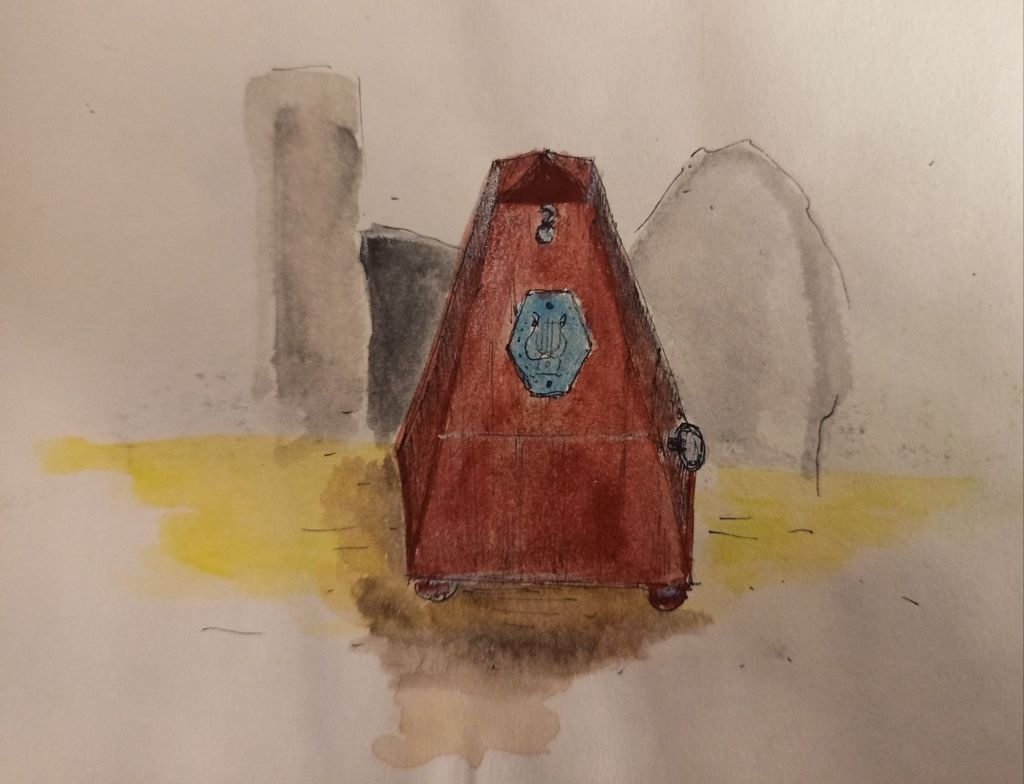
J.N.Mälzel (1772-1838): burocracia de la musicalidad
Vivimos en una época en la que la medición se ha convertido en una especie de ruido de fondo. Uno casi ya no se da cuenta. Simplemente está ahí: los pasos, las calorías, los intervalos de concentración, los ciclos de sueño. Un conteo constante, una especie de inventario de uno mismo que se ha vuelto tan natural como lo era antes dar cuerda a un reloj.
Y lo fascinante es lo siguiente: cuanto más precisos se vuelven estos instrumentos, más difusa se vuelve nuestra percepción de nosotros mismos. Ha surgido una asimetría curiosa: precisión hacia afuera, vaguedad hacia adentro. Los números ganan nitidez, pero la comprensión se vuelve más borrosa. Es como si la sociedad hubiera construido una lupa que agranda todo, excepto aquello que realmente quisiéramos ver.
Esto se observa en los momentos más pequeños de la vida cotidiana. Uno puede saber exactamente cómo se comportó el ritmo cardíaco durante un paseo, y sin embargo no entender por qué la mente no logró aclararse mientras caminaba. Se conocen las estadísticas, pero no la sensación. Se tienen los datos, pero no el sentido.
Y así surge una atmósfera peculiar: una sociedad que se registra a sí misma con un detalle cada vez más fino, mientras se comprende cada vez menos. Un leve vapor que se expande silenciosamente. Un estado sutil de sobredeterminación, en el que todo se mide pero poco se entiende.
Podría decirse que estamos desarrollando una nueva relación con la realidad: Los números ofrecen estructura, pero no orientación. Aportan calma, pero no explicación.
Resulta desconcertante. Un paradoja cultural que puede contemplarse con cierta extrañeza: tenemos las herramientas para medir el mundo con precisión, pero carecemos de un lenguaje compartido para decir qué significa esa precisión.
Vivimos en una sociedad que se mide a sí misma sin saber realmente hacia qué se está midiendo.
Una silenciosa desmesura en el corazón de todas nuestras mediciones.
@smihca’25
«Lleno de méritos, pero poéticamente, habita el hombre en esta tierra.
Por eso, mientras la cordialidad, la pura, permanezca en el corazón, el hombre sigue siendo una medida.
¿Existe en la tierra una medida? No, no existe.«
(„In lieblicher Bläue“ Friedrich Hölderlin 1770-1842)
The audition will last around 30 minutes and will focus on the declamation of texts and the general ability to sing early music. No special preparation is required and you do not need to prepare a presentation.
… en la vida diaria los hallazgos inesperados, hay que tener el ojo entrenado. Las cosas ocurren cuando uno está atento. Es como reconocer en un cuadro una mancha desencadenante de sentido, pero si uno no está ahí pintando no sucede nada. Yo quiero pensar que las cosas siguen sucediendo incluso cuando no estoy, mi problema es no tener varios yos, uno que viva en Mali, otro en París, otro aquí: tengo la sensación de que cuando llegue a Mali encontraré que mis cuadros se han ido pintando. Ésa es mi ilusión, aunque es un poco esquizo. Siempre he admirado a Pessoa, me parece tentador tener heterónimos. Ahora asocio esos yos con mis talleres.”
Miquel Barceló
«You have to know how to recognise
… unexpected discoveries in everyday life; you have to have a trained eye. Things happen when you are paying attention. It’s like recognising a spot in a painting that triggers meaning, but if you’re not there painting, nothing happens. I like to think that things continue to happen even when I’m not there. My problem is that I don’t have several selves, one living in Mali, another in Paris, another here. I have the feeling that when I arrive in Mali, I will find that my paintings have been painted. That’s my dream, although it’s a bit schizophrenic. I’ve always admired Pessoa; I find it tempting to have heteronyms. Now I associate those selves with my workshops.»
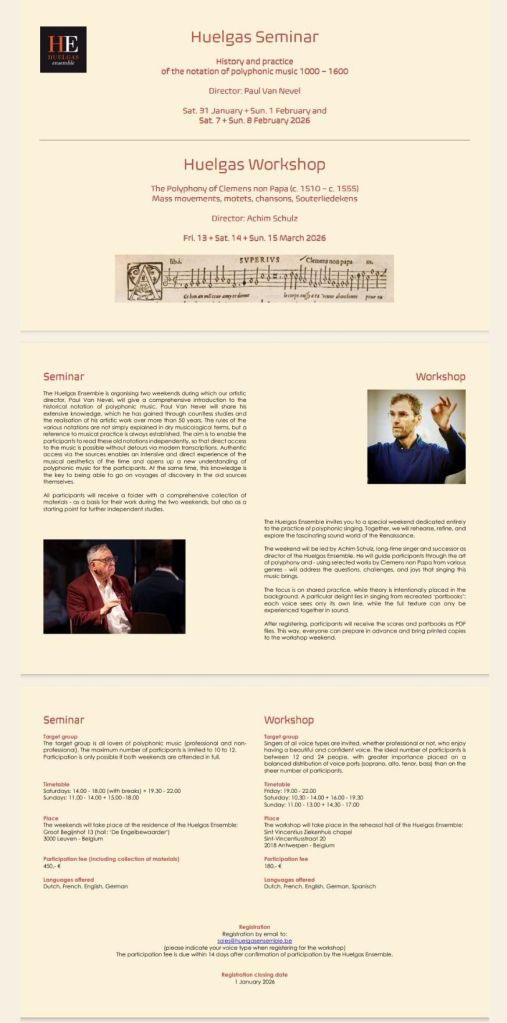
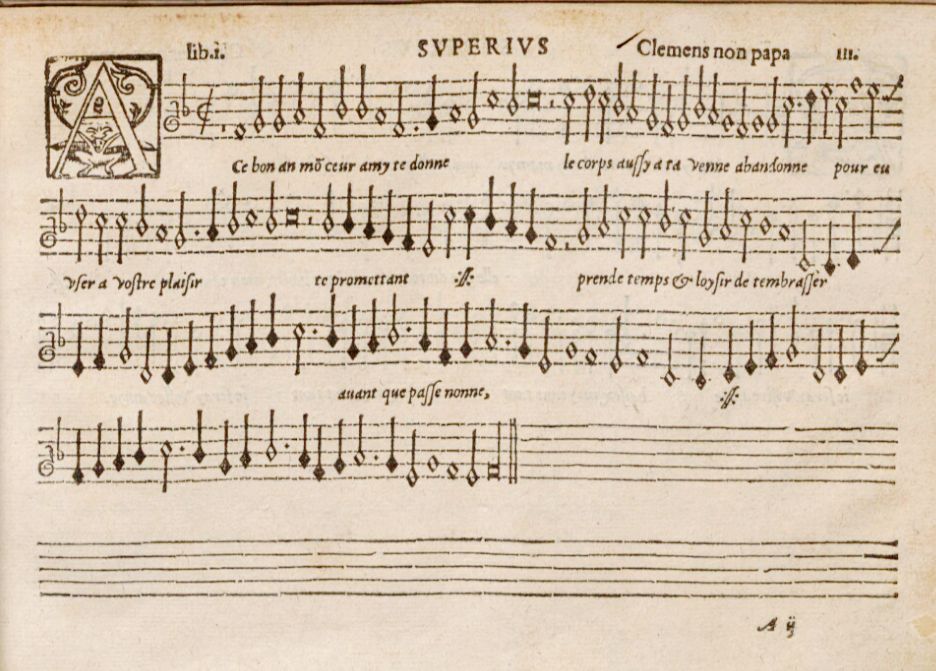
Clemens non Papa (c1510-c1555) Messteile, Motette, Chansons, Souterliedekens
Leitung Achim Schulz
13/14/15 März 2026 Antwerpen Belgien
Das Huelgas Ensemble lädt zu einem besonderen Wochenende ein, das ganz im Zeichen der Praxis des mehrstimmigen Singens steht. Gemeinsam üben, verfeinern und entdecken wir die faszinierende Klangwelt der Renaissance.
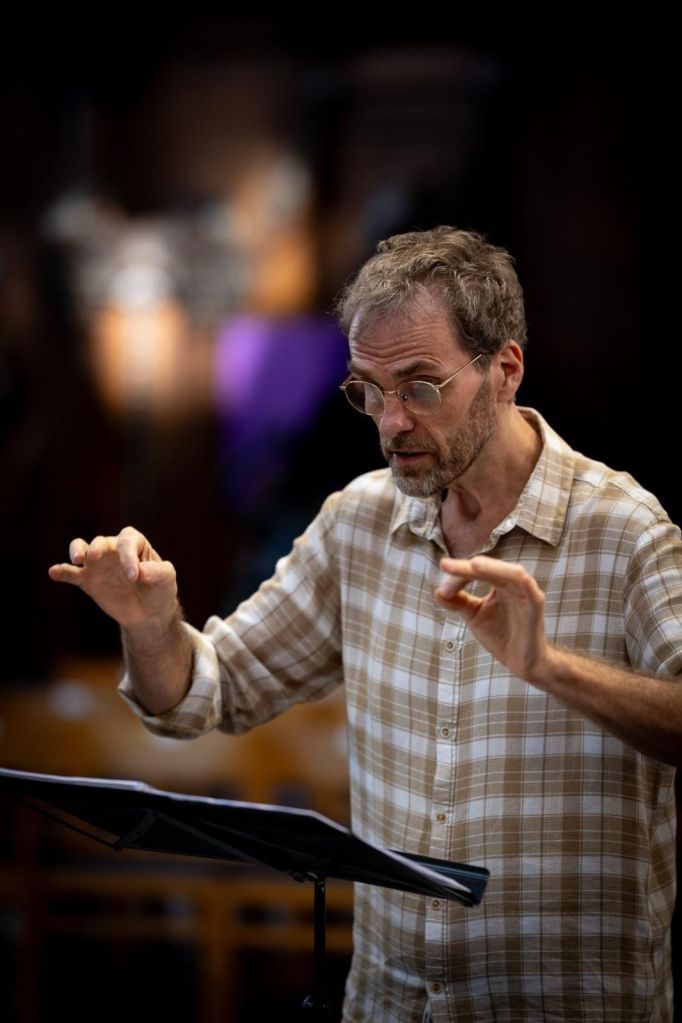
Geleitet wird das Wochenende von Achim Schulz, langjährigem Sänger und Nachfolger in der Leitung des Huelgas Ensembles. Er führt die Teilnehmenden durch die Kunst der Polyphonie und widmet sich mit ihnen den Fragen, Herausforderungen und Freuden, die das Singen dieser Musik mit sich bringt – anhand ausgewählter Werke von Clemens non Papa aus verschiedenen Genres.
Eingeladen sind Sängerinnen und Sänger aller Stimmlagen, ob professionell oder nicht, die Freude an einer klangschönen und sicheren Stimme haben.
Im Mittelpunkt steht die gemeinsame Praxis – Theorie tritt bewusst in den Hintergrund. Ein besonderer Reiz liegt zudem im Singen aus nachempfundenen ‘Stimmbüchern’: Jede Stimme sieht nur ihre eigene Linie, während das Ganze erst im gemeinsamen Klang erfahrbar wird.
Nach der Anmeldung erhalten die Teilnehmenden die Partituren und Stimmbücher als PDF-Dateien. So kann sich jede und jeder vorbereiten, und die ausgedruckten Materialien zum Wochenende mitbringen.
Leitung:
Achim Schulz
Repertoire:
Clemens non Papa (c1510- c.1555) Messteile, Motette, Chansons, Souterliedekens
Ort: Der Workshop findet im Probenlokal des Huelgas Ensemble statt: Sint Vincentius Ziekenhuis Kapelle Sint-Vincentiusstraat 20 2018 Antwerpen – Belgien
Preis: 180€
Die ideale Anzahl der Teilnehmer ist zwischen 12 und 24 Personen, wobei es mehr auf die balancierte Stimmlagenverteilung (Sopran Alt/Contratenor Tenor Bass) ankommt als auf die bloße Teilnehmerzahl.
Kommunikation bei der Arbeit ist auf Deutsch Englisch Spanisch Französisch und Niederländisch möglich.
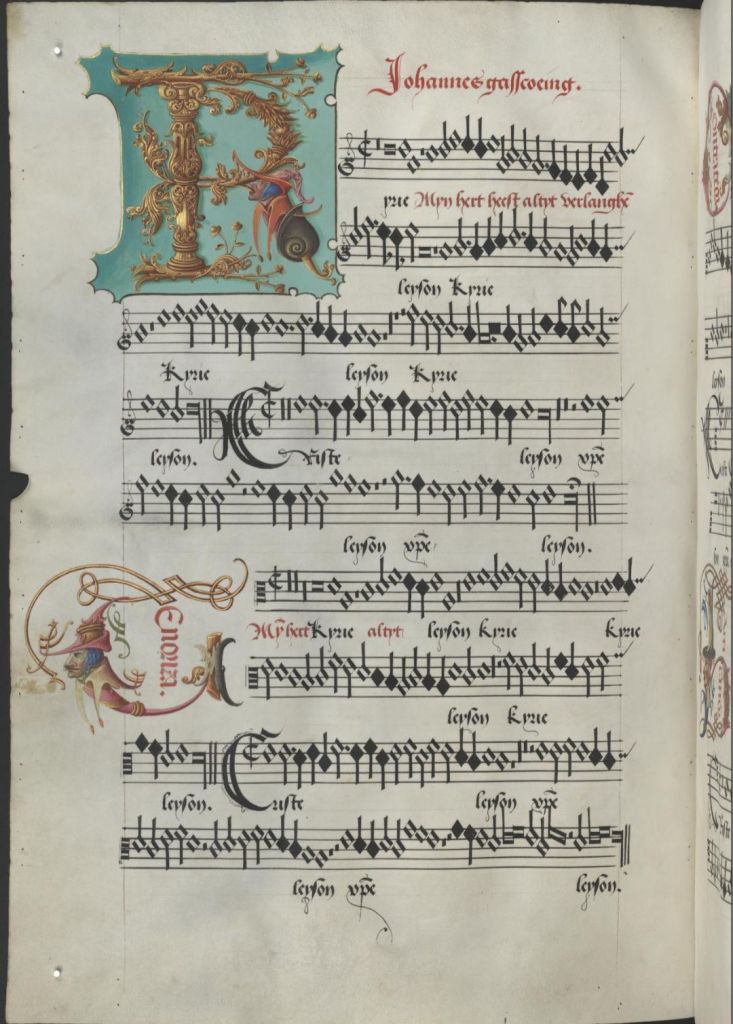
Johannes Casscoignt (Mathieu Gascogne) fl. 1517-18
Messe á4 Stimmen ‘Myn Hert altijd’ (circa 1510)
Messbuch des Hofschreibers Petrus Alamire. Johannes Gascogne: Missa über die Motette ‘Myn Hert heeft altyd verlanghen’ von Pierre de la Rue
Auf dem Programm stehen die 4 stimmige Messe ‘Myn Hert heeft altyt verlanghen’ des Renaissance Komponisten Johannes Gascogne, oder richtiger bekannt als Mathieu Gascogne, sowie die Vorlage-Motette von Pierre de la Rue und zwei weitere Motetten von Johannes Gascogne.
Die Mitwirkenden bekommen die Partituren nach Ameldung zugesendet und üben die Stimmen selbst in eigener Arbeit ein. An zwei Orientierungs Probenwochenenden die eine Anleitung und Orientierung des Selbst Erarbeiteten darstellen, sowie einer Probenwoche wird die Musik dann im Ensemble/Chor gemeinsam unter der Leitung von Achim Schulz einstudiert.
Die Teilnahme an der Probenwoche sowie Haupt- und Generalprobe ist obligatorisch.
Es werden zwei Konzerte im Raum Basel stattfinden.
Jeder der eine schönklingende intonationssichere und singfähige Stimme hat ist willkommen. Wie immer sind singfeste Männerstimmen besonders gesucht. Junge geeignete Stimmen sind selbstverständlich erfreulich und nichtsdestoweniger sind erfahrene Sänger unabhängig des Alters gleichermaßen eingeladen mit zu machen, solange eine Qualität erhalten bleibt die jeden Mitwirkenden animiert und herausfordert.
Monteverdi, Pari and de Rore in the face of love and loss
If you are a Concert organiser and interested in this programme by 10 Singers please contact the Huelgas Ensemble : Click for mail
Monteverdi, Pari and de Rore in the face of love and loss
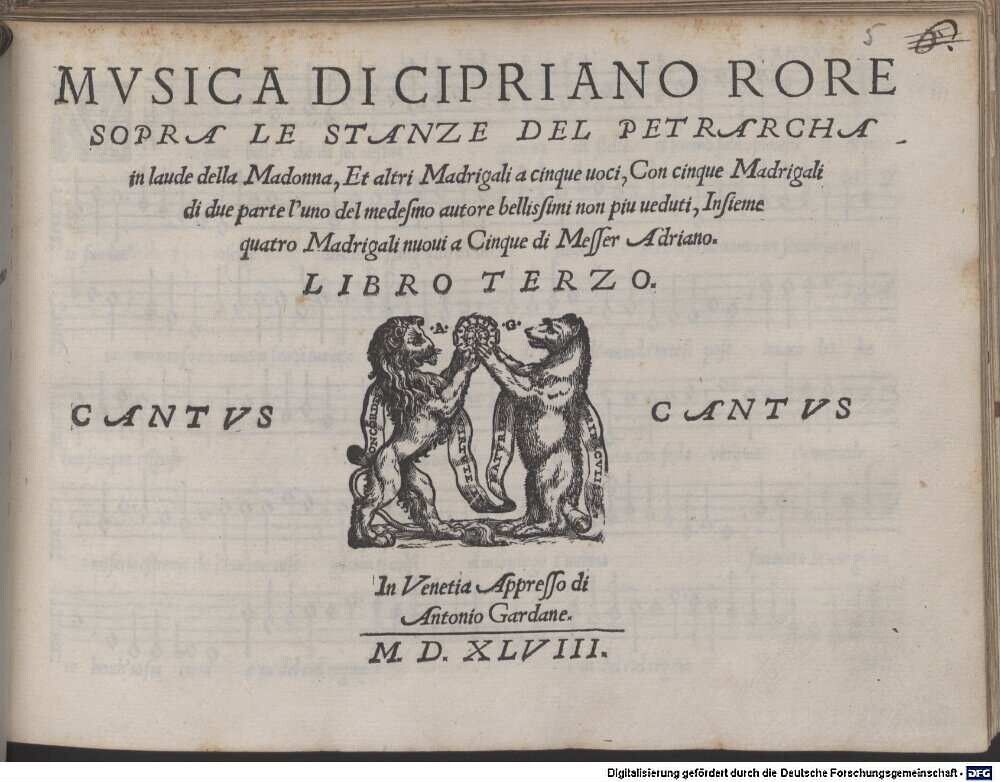
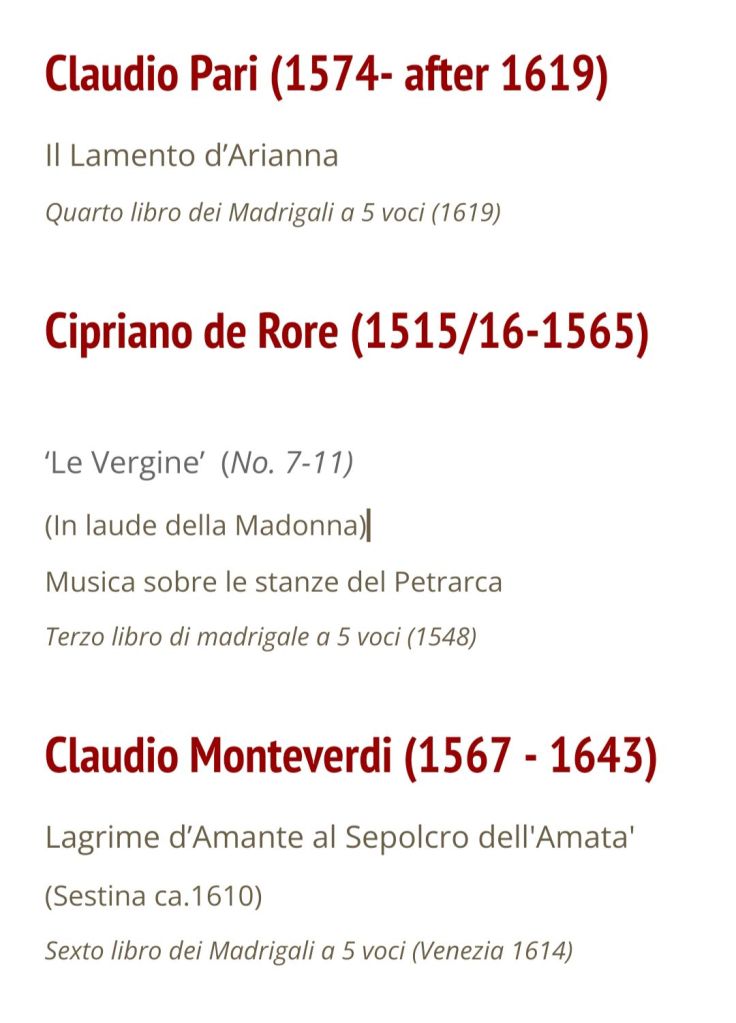
This programme takes us into the profound world of grief, despair and longing, in which composers Claudio Monteverdi, Claudio Pari and Cipriano de Rore set the human experience of love, suffering and loss to music in a moving way. At the centre is Claudio Monteverdi’s «La Sestina» – ‘Lagrime d’Amante al Sepolcro dell’Amata’ , a masterpiece that powerfully expresses the despair and inexorable decline of vitality in the face of the death of a loved one (his wife, who died three years earlier, and as well his 18 years old deceased student Caterina Martinelli, who was intended for the title role in the opera ‘Il Lamento d’Arianna’) through the artful use of the ‘sestina’ form, so emotionally introduced to us by Francesco Petrarca. Claudio Paris’ ‘Il Lamento d’Arianna’ takes up the theme of the abandoned lover and depicts Arianna’s lament after she was left behind by Theseus on Naxos. Paris’ setting, which draws on Monteverdi’s famous ‘Lamento d’Arianna’ Madrigal, captures the intensity of Arianna’s pain and despair with expressive melodies and rhetorical figures that immediately draw the listener into her emotional turmoil. This programme is sublimated by a selection of 5 of the 11 Cipriano de Rores «Le Vergine» stanzas, in which Francesco Petrarca expresses his love for ‘Donna Laura’ and his grief over her death in 1348 as religious veneration of Mary. Together, these works reveal music’s ability to reflect the most complex and profound human experiences. They invite us to empathise with the nature of love, the transience of life and its comforting powers. @smihca2025
Every European music listener has probably experienced once the medieval gothic cathedral as a space at some point, as an overwhelming experience. The expanse, height and spatial sound as a physical sensation may perhaps be compared to the starry sky that we all are allowed to contemplate on moonless nights. A kind of insatiable wonder appears within us. The distance resembles the apparent distance to God, the Great Consciousness. And yet we may be overcome, at the same time, by a feeling of intimacy, of a familiar infinity that is perhaps also revealed in our own intimacy. Time and time again, we recognise ourself when waking up in the morning. An infinite neverending intimacy.
The oversized space of the house of God, the sky of stars, becomes a protective and at the same time permeable membrane, where intimacy with ourselves or with God, with the miracle of life, with the great unity of all being finds its place, protected as in a chamber where prayer or meditation is practiced before going to sleep or after. Intimacy in the midst of extimacy. Extimacy despite intimacy.
However, the ‘time of the cathedrals’ is also the time of intimate chambers where chanson and love lyrics resound. Whether it is mundane love or religious love that is offered, it is not separated by the four narrow walls. The window allows a view out into the starry sky. Into the universe. Into the infinite expanse, size, height and inseparable wholeness.
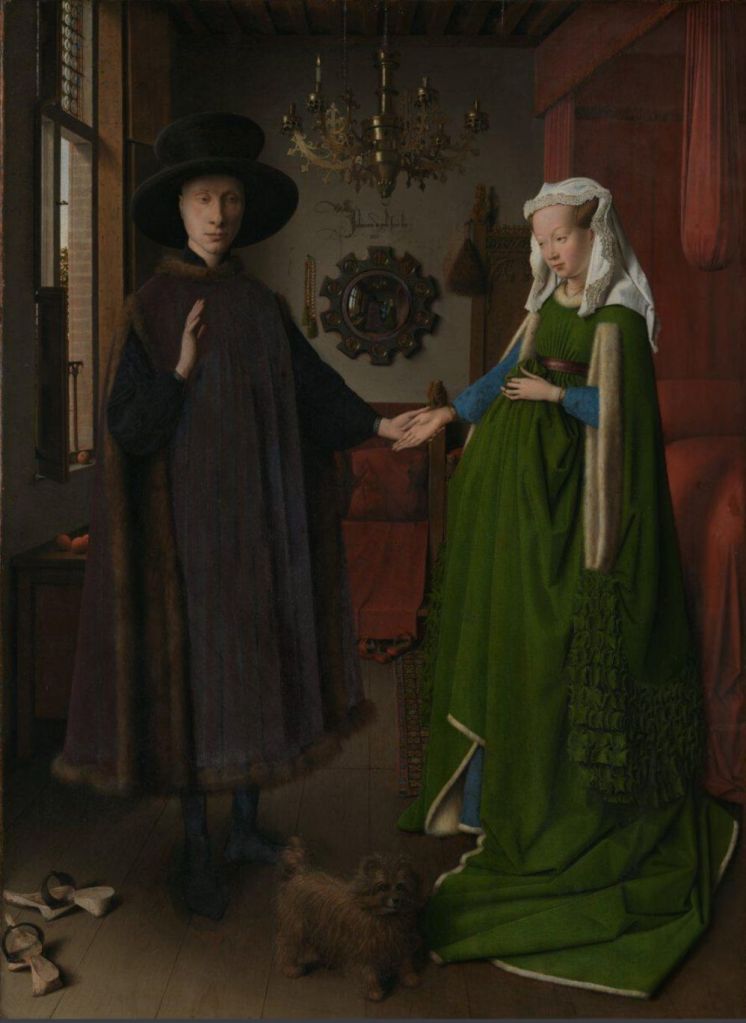
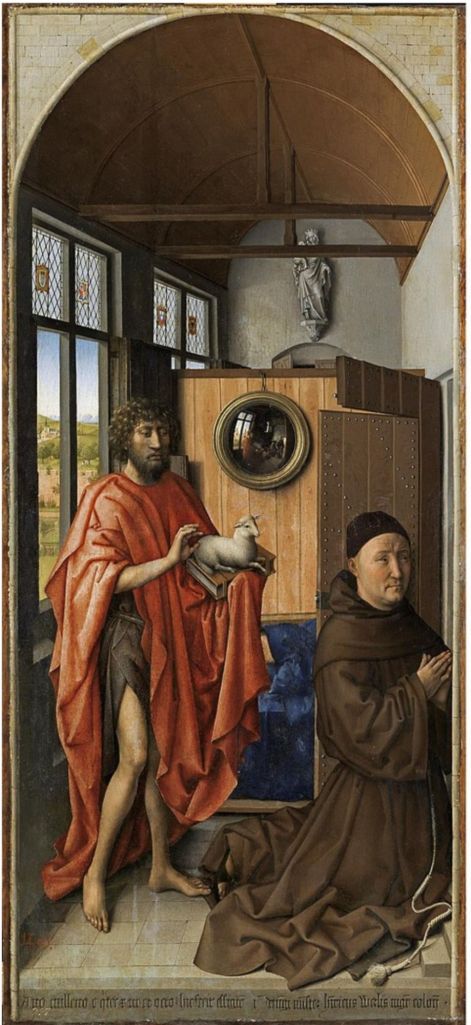
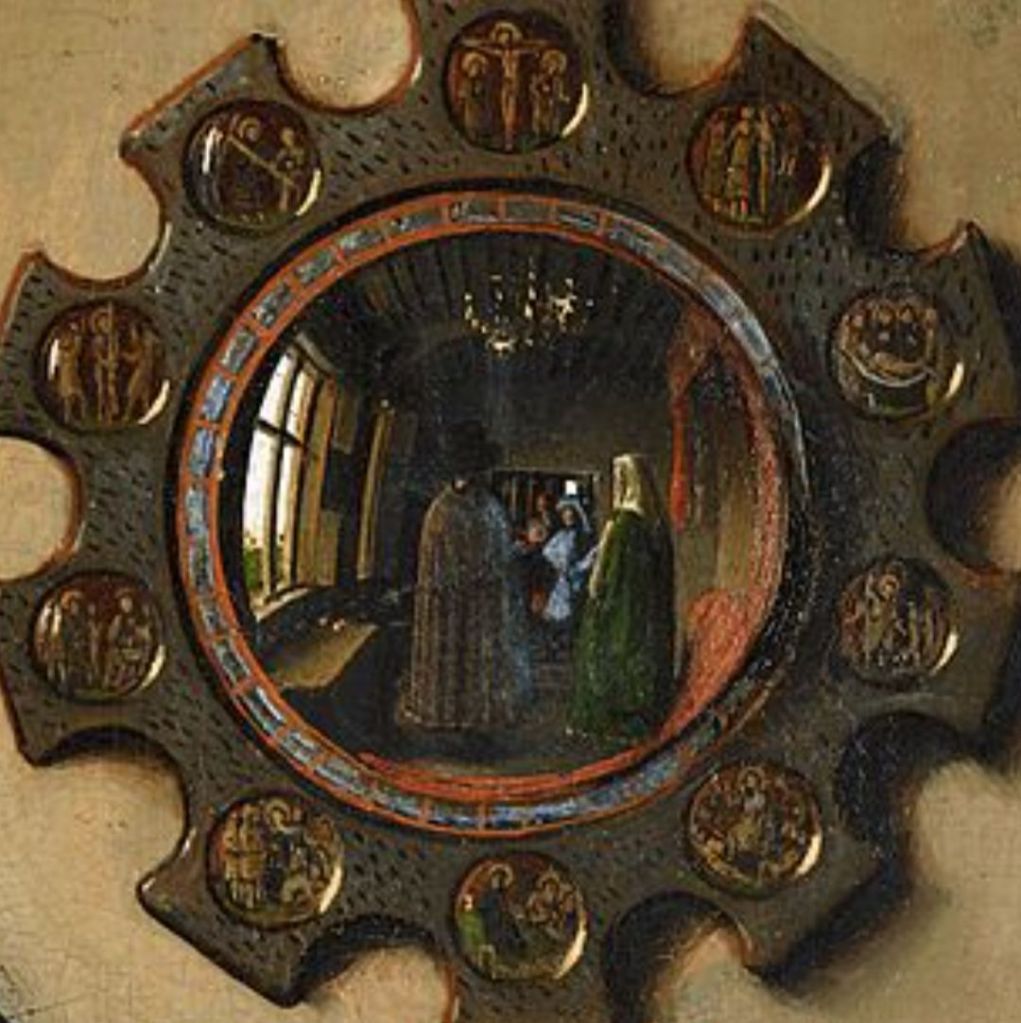
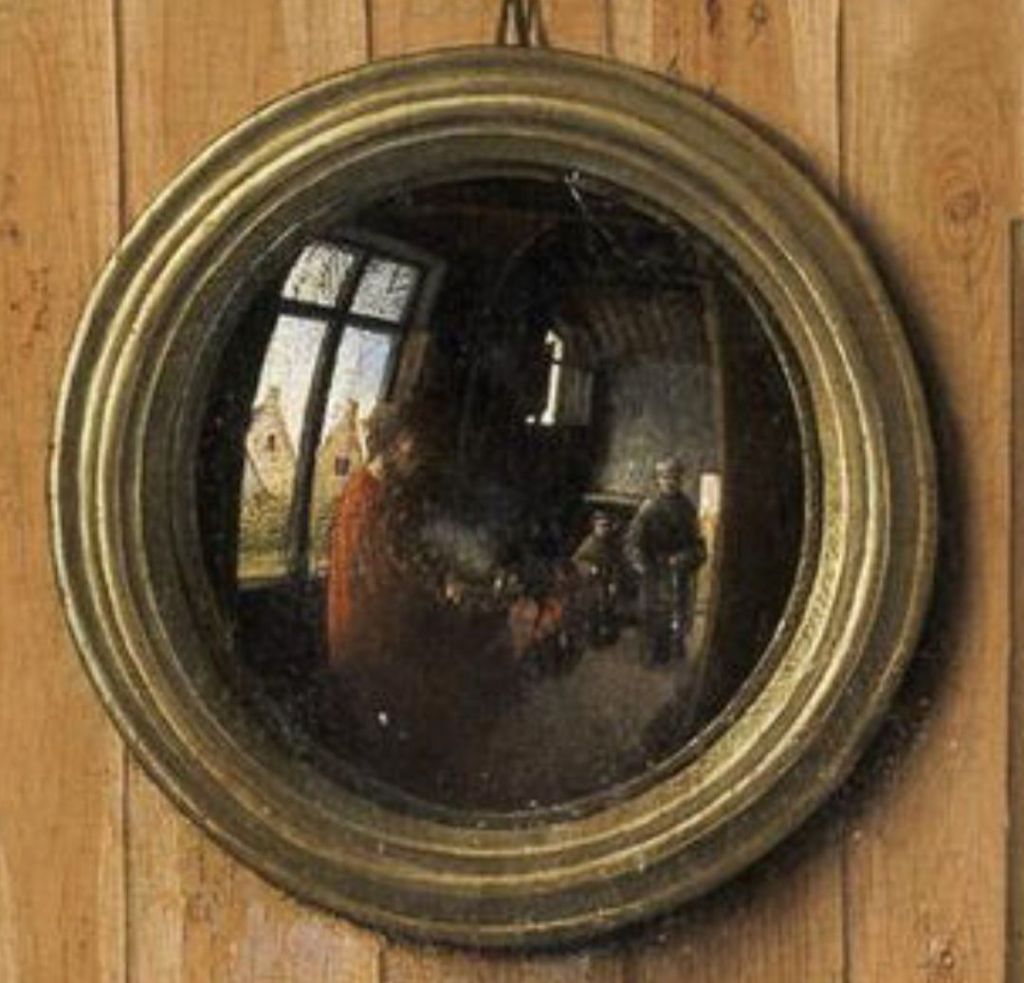
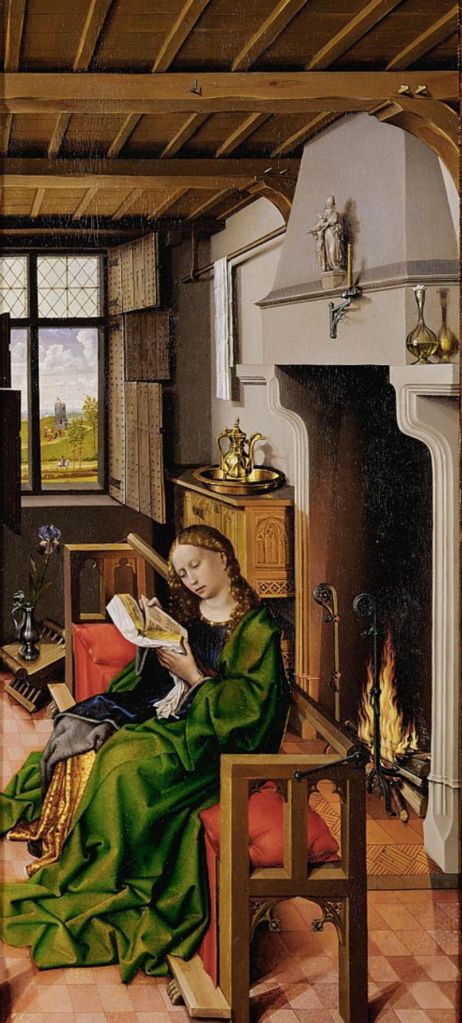
The Convex Mirror, which can be recognised in Van Eyck’s Arnolfini Wedding Painting 1434 and in Robert Campin’s Triptych of Cologne’s Heinrich von Werl, allows the narrow space to be seen in its entirety. The incredible accuracy in perspective and detail are probably due to an achievement of the science of optics, the mirror lens. If you compare Campin’s paintings with the refined draperies, the photo-like portraits, or the chandelier in van Eyck’s convex mirror with Giotto’s paintings from around 1310, you immediately realise that a technical achievement is making way for new spaces. Are they more intimate spaces? Are they achievements or merely spaces that allow us to experience things differently? Perhaps something similar happens in music. The Convex Mirror opens up more detailed listening. Perhaps more intimate listening? Writing becomes more virtuosic, like the draperies of Campin and others at the beginning of the 15th century.
A mantra of light, the convex mirror, which reflects the unheard-of vastness of the music of the extimacy of Cathedrals, and the intimacy, the closeness of the chanson, not as a contrast but as «an inseparable whole». The music here perhaps becomes a ‘Space as a Membrane’: sonic ‘Klangrausch’ like the enumeration of a hundred saints in a litany, or the poetic epic world of subtlety, the chanson. Separate and yet permeable. Intimacy versus extimacy.
Van Eyck Arnolfini bruiloft (wedding)
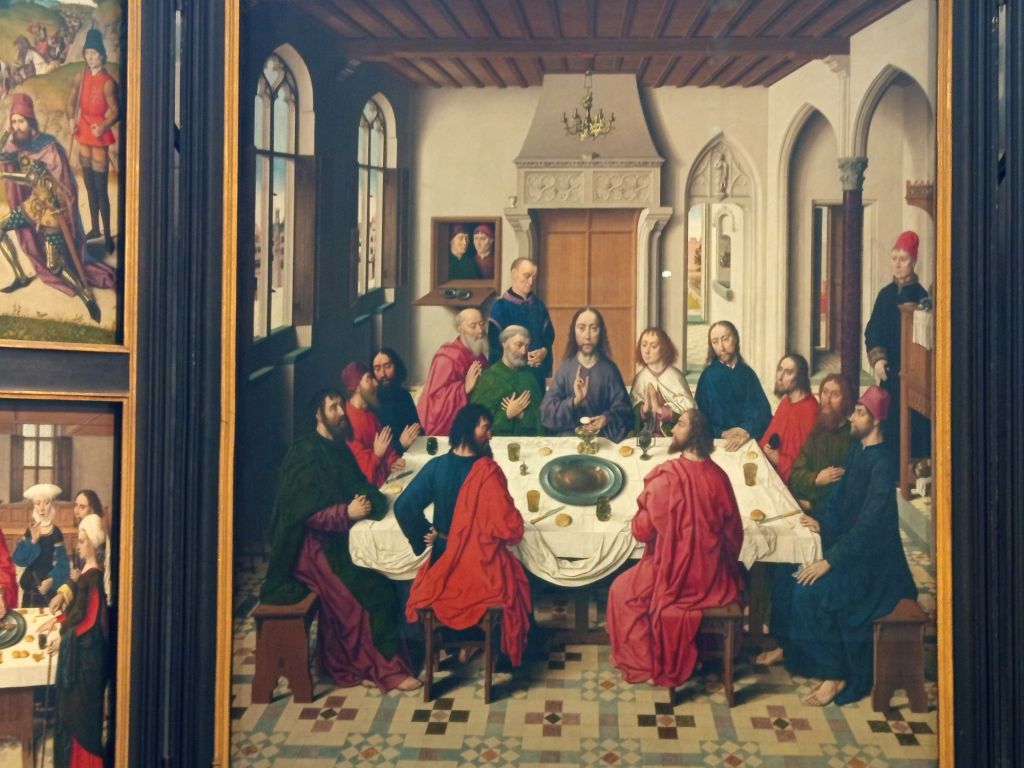
In the paintings we often see two people with ‘a text’ or ‘names’ and two other people without names, unknown, in the background, in the convex mirror or, as in the ‘Last Supper’ by Bouts, in a wooden window frame on the left (here we see two other men in the foreground above the ‘Narrative of Jesus and the Twelve Disciples’: on the left the leader of the ‘Brotherhood’ in Leuven, whose Dierik Bouts commissioned the painting, and on the right the painter D. Bouts himself. Similar to Van Eyck, who signs his own presence with the words «1434 J. Van Eyck fuit hic», or Johannes Ciconia at the end of his motet «O felix templum jubilae», and Nicolaus Zaccharie at the end of his motet «Plebs fidelis» leaves his signature musically
The two figures in the foreground could stand for the two different lyricised first lines of DuFay’s or Dunstaple’s etc. typical isorhythmic motets of this period, and the background or mirror figures for the two lower unlyricised parts. a.s.
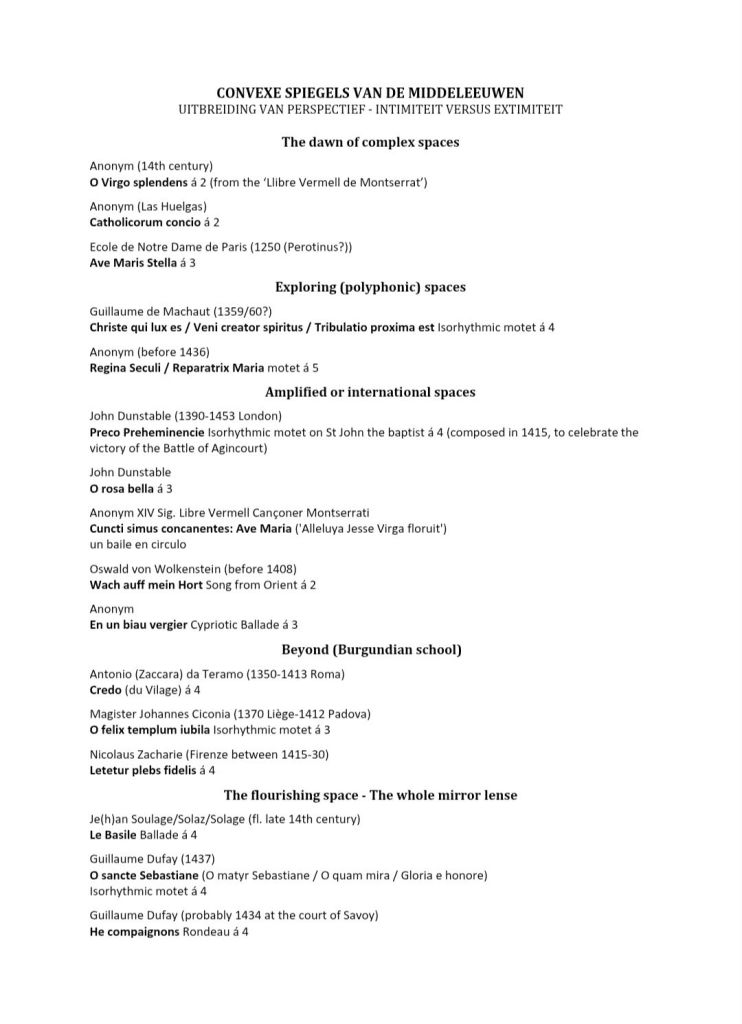
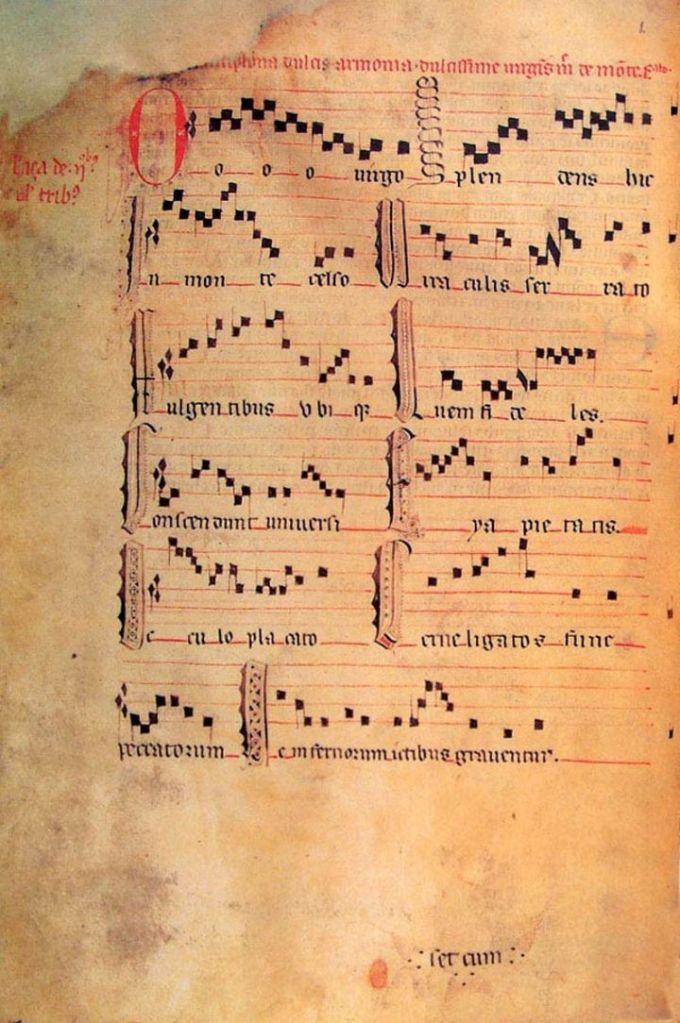
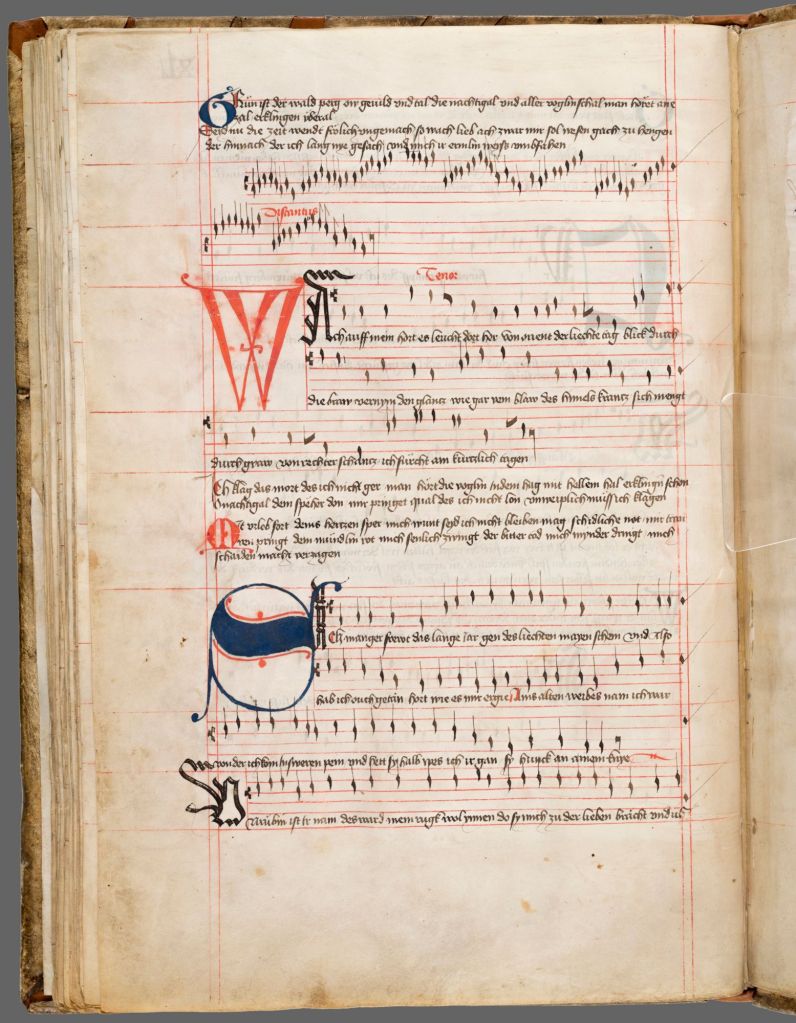
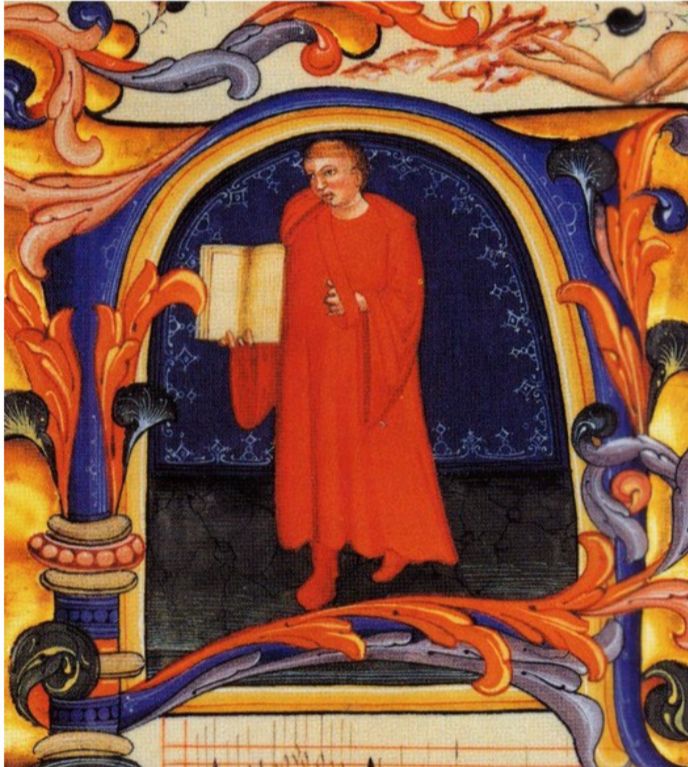
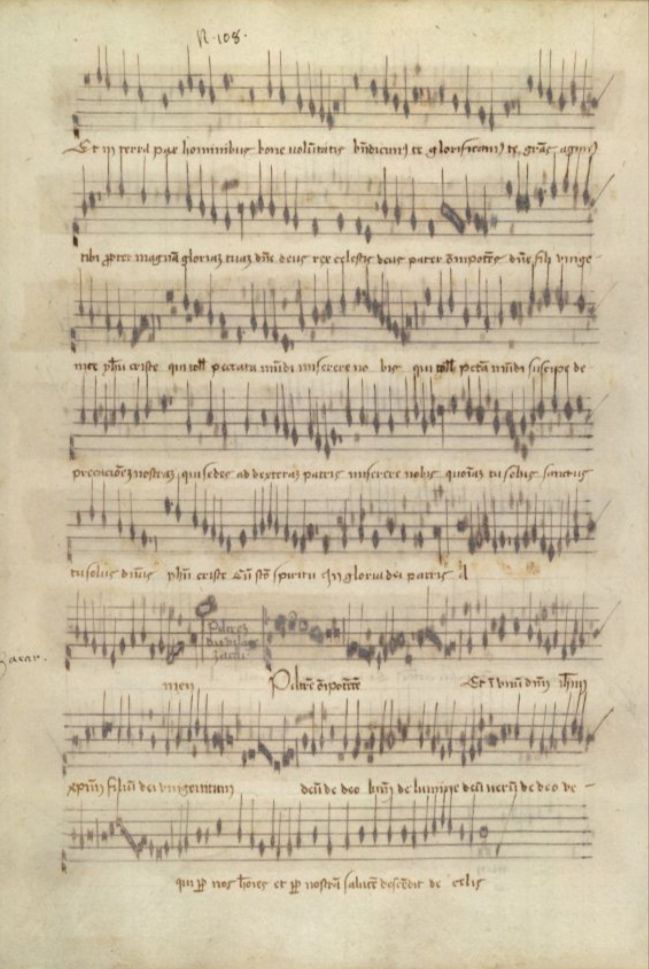
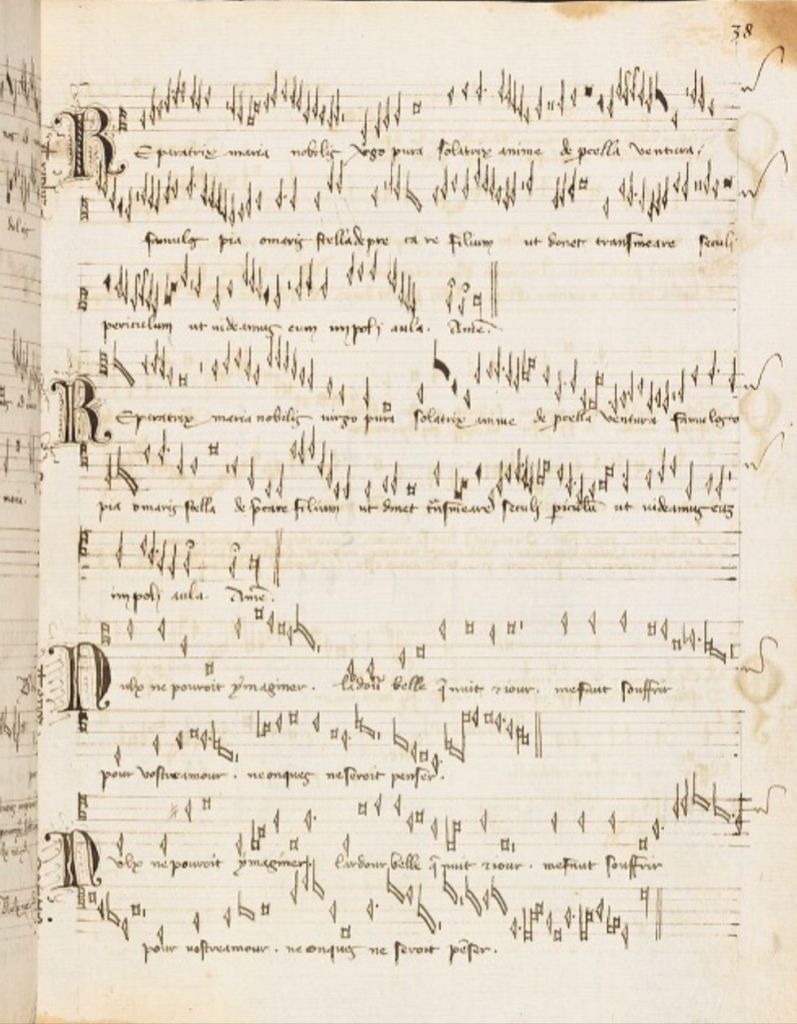
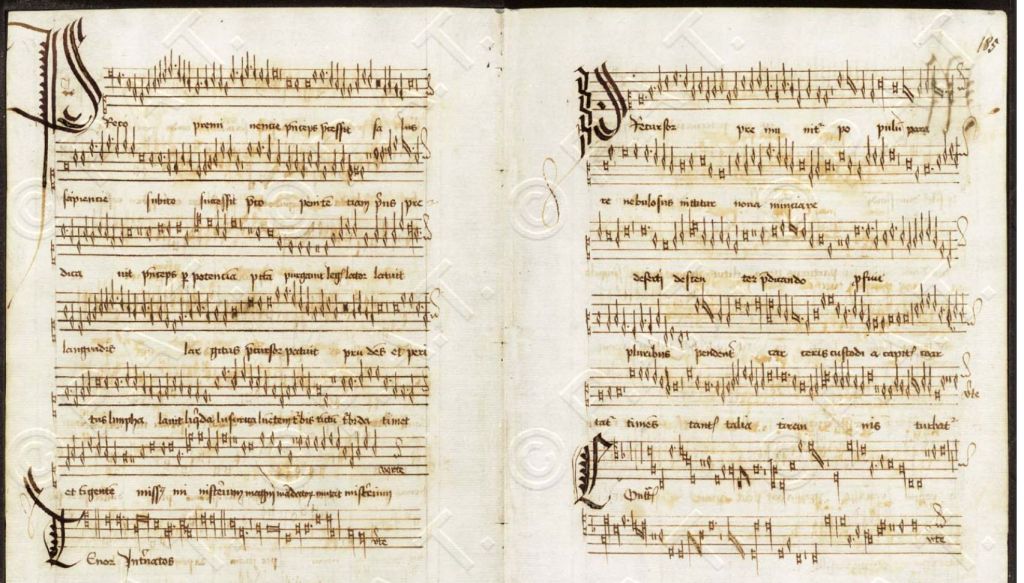
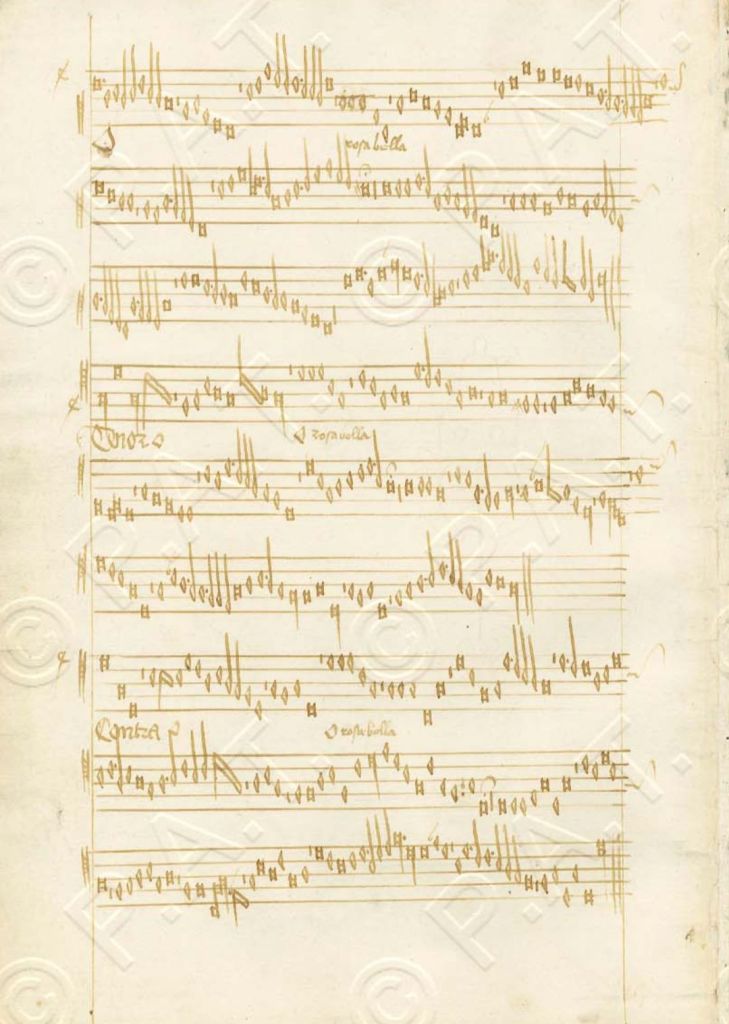
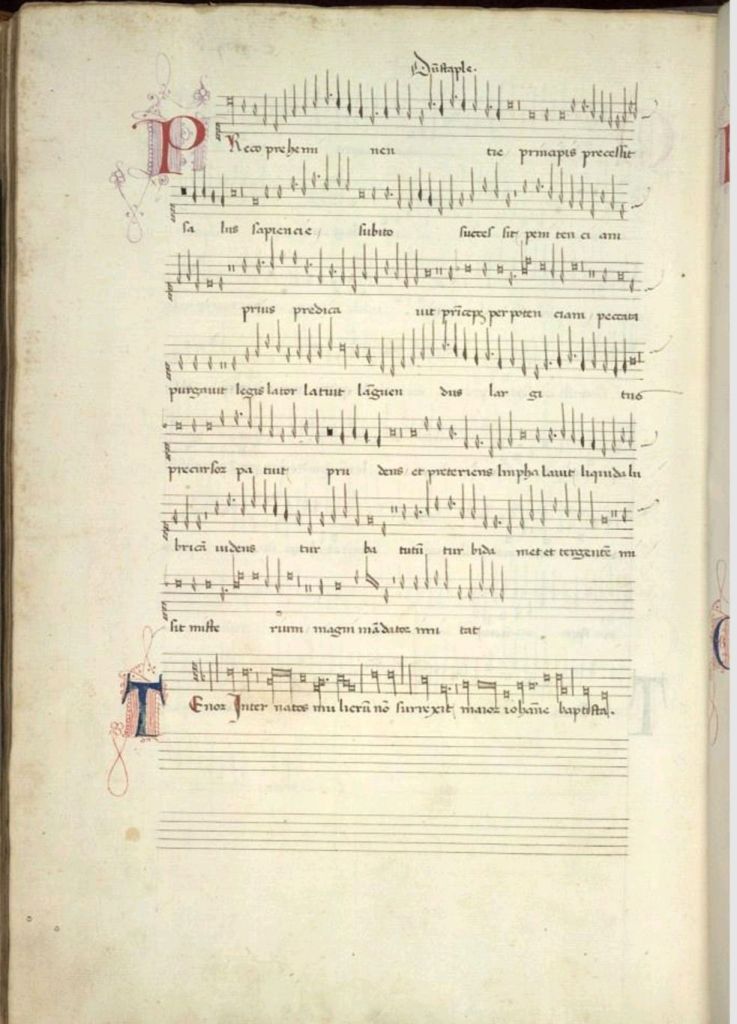
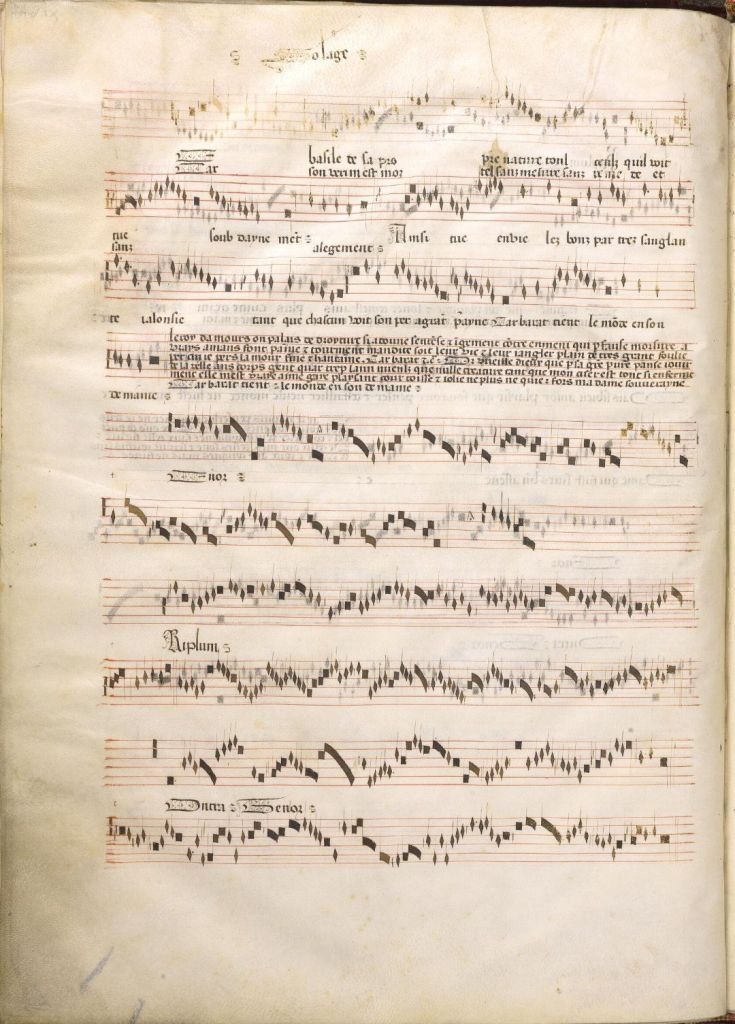
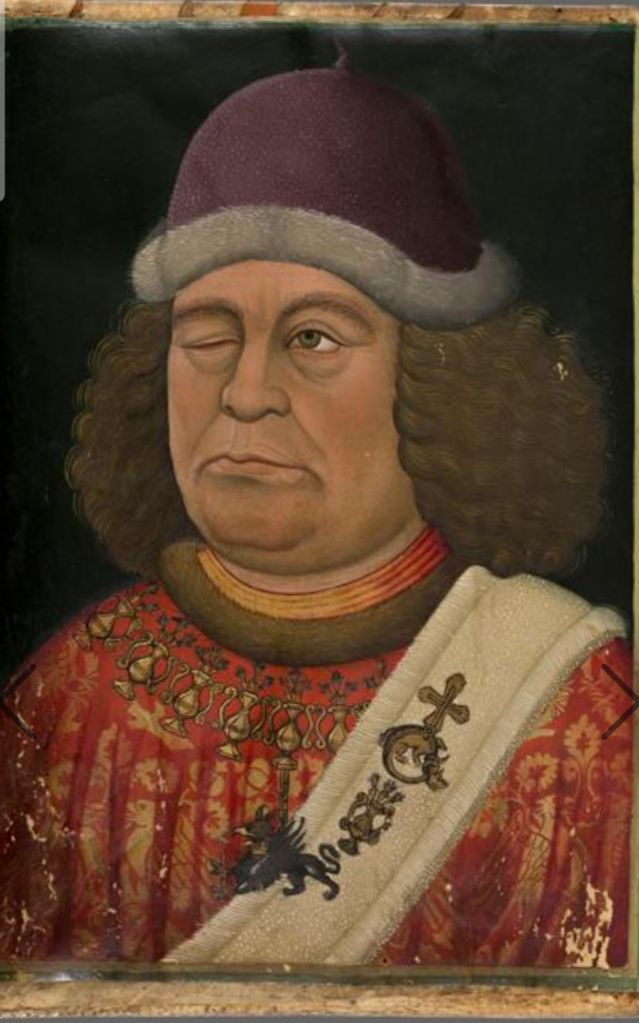
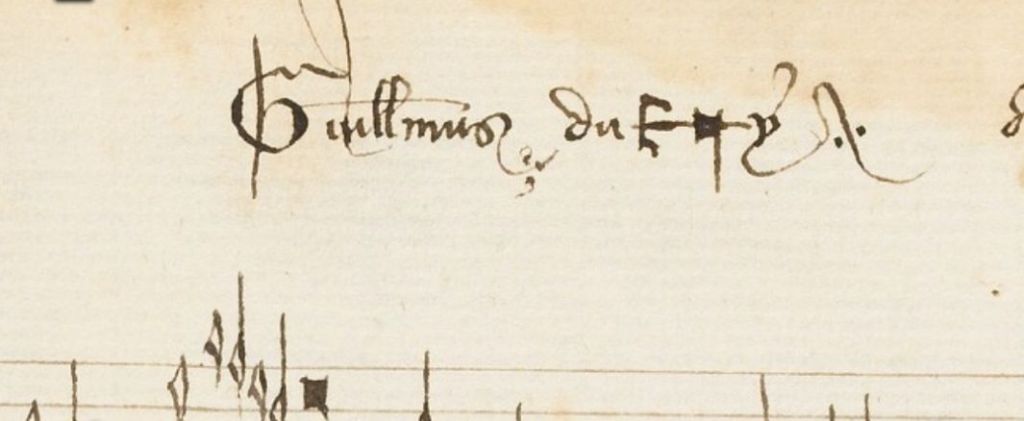
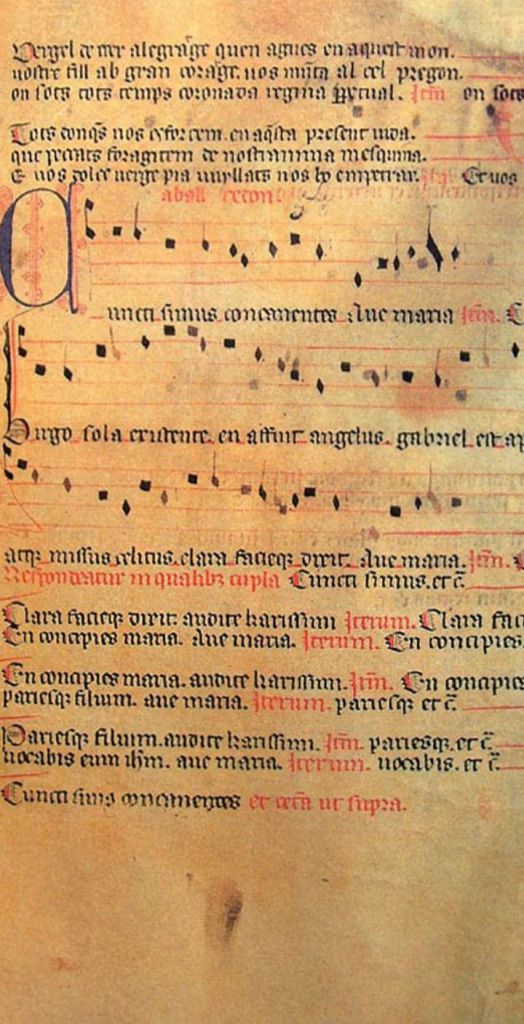
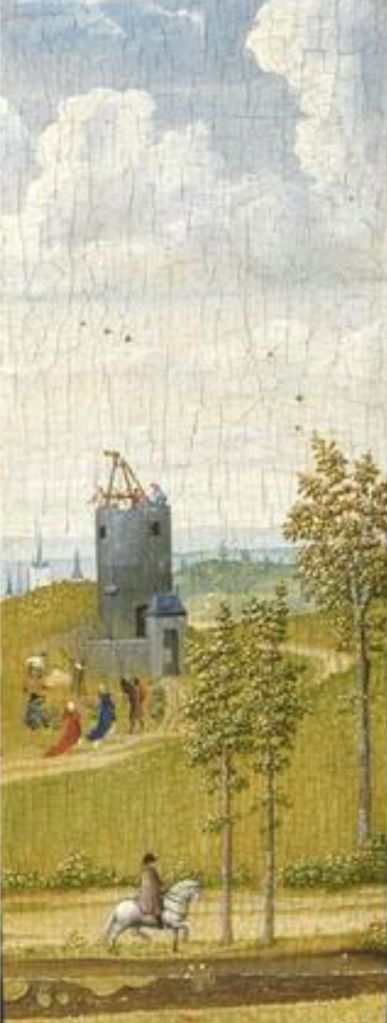
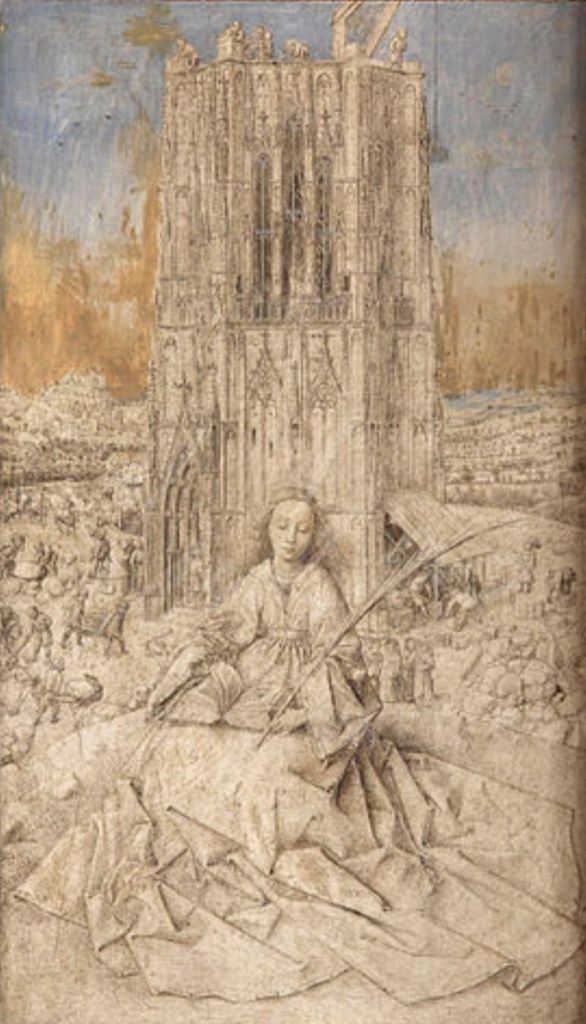
Robert Campin St JohnBaptiste left wing tryptic piece (see also Machaut – ‘Christe qui lux‘)J.Van Eyck convex mirrorR.Campin convex mirrorLaus Polyphonia 2025 Antwerpen Huelgas Ensemble Direction achim schulzDieric Bouts ‘The last supper’ Altarpiece Tryptic in Leuven St.PieterLlibre Vermell Montserrat O virgo splendens canon á3Innsbrucker Lieder-Handschrift – Wolkenstein Wach auff mein Hortá2Antonio Zaccara da TeramoCredo (‘du Vilage’) Antonio Zaccara da TeramoRegina Seculi/Reparatrix Maria á5 AnonymousJohn Dunstaple Preco PreheminencieO rosa bellaá3 Dunstaple/ á6 BedynghamPreco Preheminencieá4 Dunstaple Jehan Solage Le Basile BalladeOswald von Wolkenstein Guillermus du FayLlibre Vermell Montserrat ‘Cuncti sumus concanentes – Ave María’Saint Barbara (right wing of the Campin – St John convex mirror piece) see also «Laetetur Plebs Fidelis» by N. ZacharieTower of St Barbara (in the background window of the Campin convex mirror piece which probably needs some kind of ‘lens’ to paint in miniature)Saint Barbara with tower J. Van Eyck (Antwerpen museum)
RADICAL ECOLOGY IS A HOMECOMING into an Embodied Solidarity with the Wholeness of Life
RADICAL ECOLOGY HAS FIVE PRINCIPLES OF EMBODIMENT: Wholeness Support Solidarity Compassion Generosity
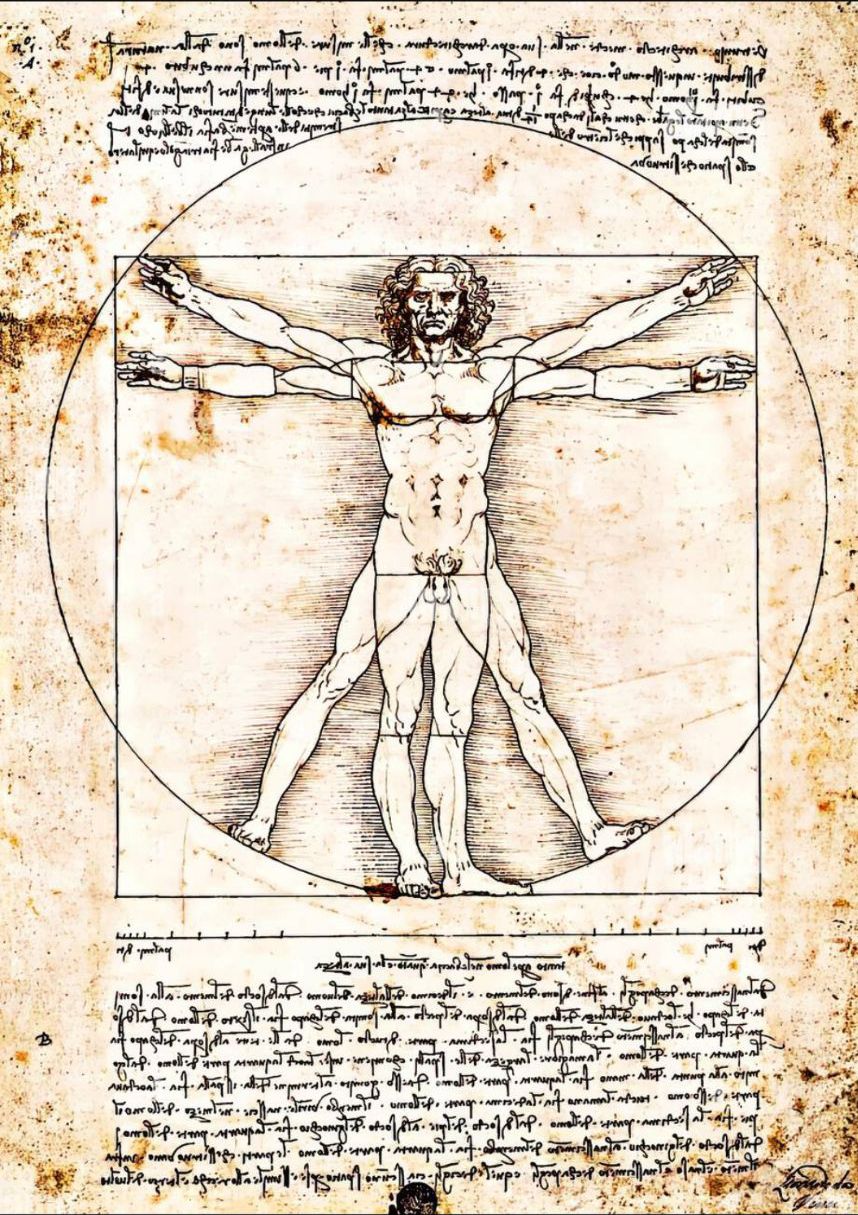
THESE FIVE PRINCIPLES EMERGE DIRECTLY FROM THE EMBODIED EXPERIENCE OF WHOLENESS This experience begins in the physical separateness of your own body. Within that separateness you clearly experience the presence of wholeness. This experience deepens from separateness into connectedness and the support that provides. Further deepening through interconnectedness generates an embodied solidarity with all forms of life. A dissolution through boundarylessness elicits compassion for all ‘others’. Finally boundarylessness dissolves into otherlessness embodied as a boundless generosity
Radical Ecology is an experiential journey of embodiment from heart to heart. It brings you deep into the heart of your own nature, to take you deep into the heart of the world.



 from heart to heart