Nothing today promises duration.
Everything is stamped with the insignia of the Next, the Immediate, the Right Now.
We live in a present so evacuated that even pauses have been converted into corridors—transitional spaces hustling us toward the subsequent task.
Out of this airless immediacy arise those fine, nearly imperceptible tremors of the nerves which, before long, condense into a general restlessness.
Acceleration is a symptom of a deficit of being.
With it comes the erosion of the contemplative faculty, that capacity which does not produce, does not optimize, does not act in order to achieve, but abides.
Every form is slow.
Every form is a detour (Umweg).
The melody itself is a detour—it does not arrive by the shortest distance but by groping, wandering, returning.
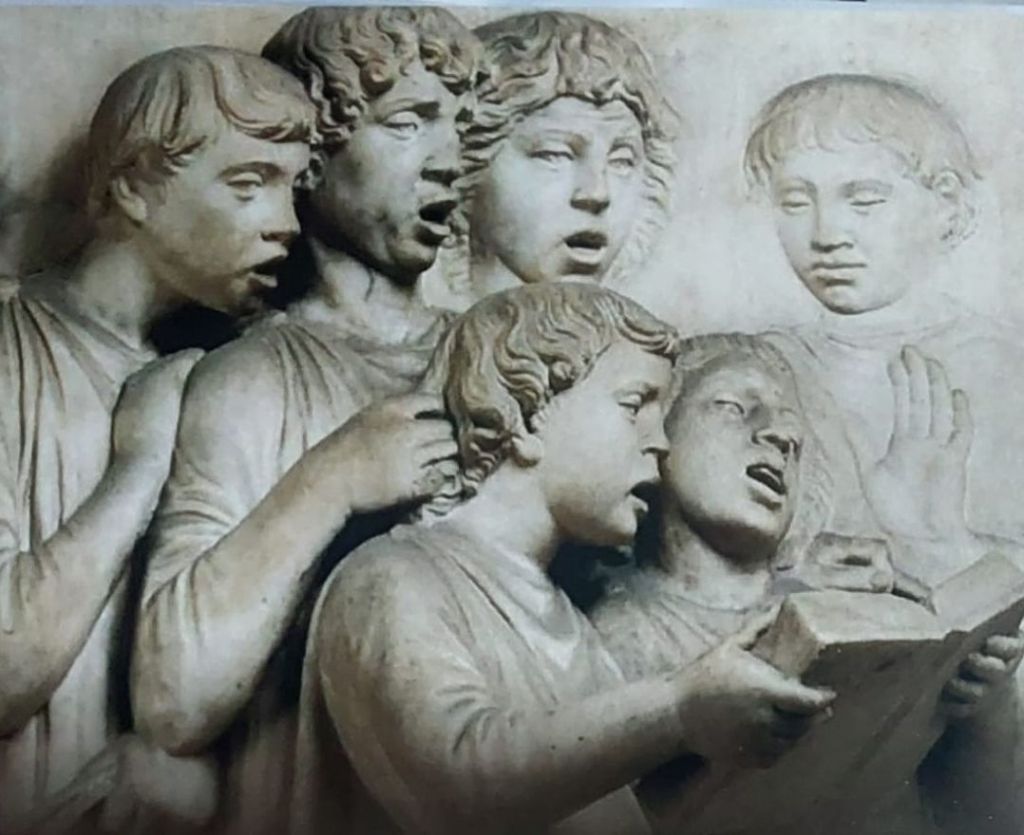
The sheet of music lies there within this detour-ness, quiet, patient, inhabiting a peculiar peacetime. It promises duration and persistence, not as grandiloquence but as material fact.
Paper ages. It crackles. It yellows. It bears traces. It is a thing.
The sheet music possesses an aura of friendliness. You take hold of it, and it holds you back—not in reaction, but in resistance. It resists mere disposal. In the tactile pleasure of touching it, a distinct fatigue awakens: not the exhaustion of depletion, not the weary self-disgust of overextension, but a composure that inspires. That disarms. That founds community because it establishes a particular tempo—a consonance, a nearness.
Between its pages lie intervals of time. You turn a page, and the turning is already part of the music. A quiet detour, distant and intimate at once.
So beautifully impractical.
The paper permits the “not-for.” It is there without mandate of purpose. It need not update itself. It wants nothing from me. It rests. And in resting, it forms.
Beauty.
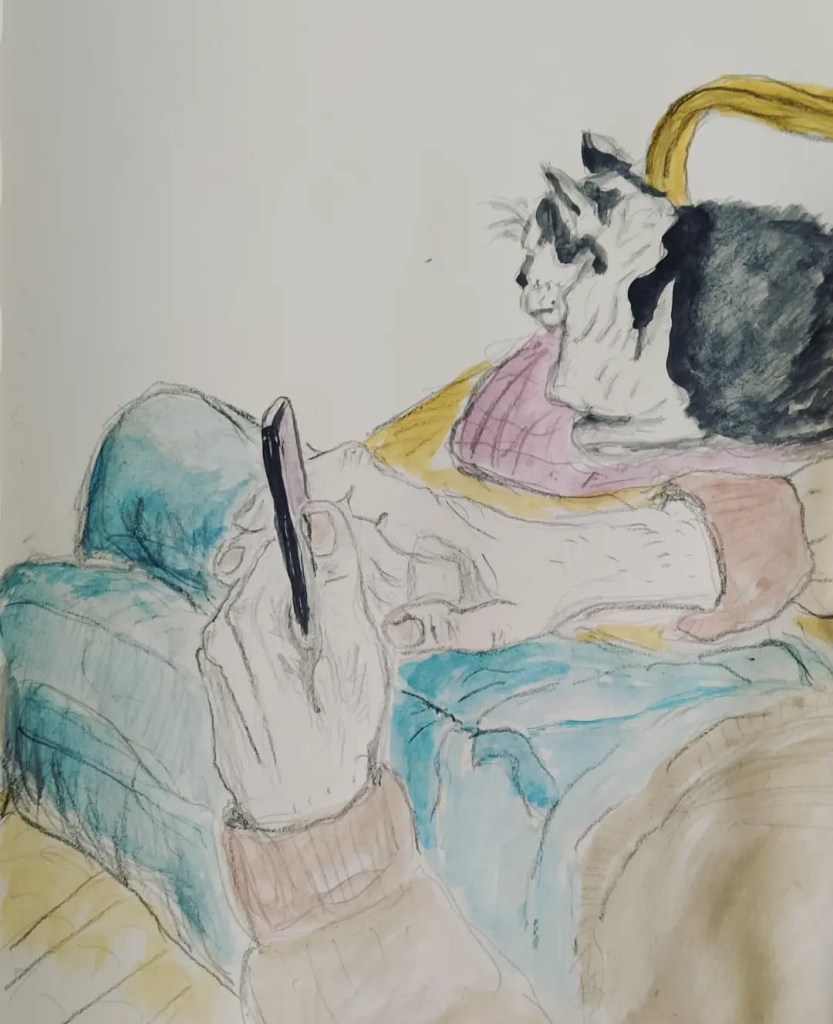
The iPad, by contrast, is distance-less. Its smooth surface knows no resistance, only the swipe.
In every swipe lies the possibility of dispersion: the next page of the score—or the invoice from an online purchase. Everything equally near, equally available, equally urgent.
This absence of distance does not create intimacy but a rigid separation.
I before the display.
I and my function.
I in the compulsion to produce.
Practicality instead Beauty of being (Sein).
Here reigns the “in-order-to.”
Every gesture is instrumental. Every click serves.
The economy of efficiency and acceleration causes the long and lingering forms to disappear.
There are no intervals anymore, only transitions. No peacetime, but perpetual activation.
Hyper-attention leaps, brief and rapid, from measure to measure, from window to window, reproducing its own exhaustion.
The sheet music, on the other hand, belongs to another order—one of contemplative life (Cicero).
It allows a clear-eyed tiredness (Peter Handke) that grants access to those long forms which elude the hysteria of the modern society of activity.
It gives shape precisely because it does not optimize.
It is sensuous precisely because it is not “smart,” not calculating.
Its thingness founds a world.
It tells (erzählt) —where the digital device (Rechner) merely counts (zählt).
Perhaps it is precisely its impracticality that saves it.
Paper knows the detour. And only in the detour does duration arise.
And only in duration does music come into being.
@smihca ’26
(with gratitude to Byung-Chul Han)
 from heart to heart